
Airless Bottle vs Pump Bottle: Fix the Dose Before You Choose the Shape
The airless bottle vs pump bottle question is usually asked about the silhouette, and that is the wrong end of the pack. Almost every skincare brief starts with a bottle shape and ends with a pump. It works better in the opposite order. The part that decides whether the pack works is not the silhouette; it is how much product leaves the pack per use, and what closes it. A serum that delivers 2 ml per pump is a two-month bottle in a 30 ml format, and a body lotion that delivers 0.25 ml is a hundred pumps per leg.
One source catalogue we publish carries 289 formats across bottles, jars, pumps and sprayers. Read together, they show where the dose sits for each kind of pack — and where the catalogue simply does not say, which is just as useful to know before a brief goes out.
What the 289 formats cover
The set is nine groups on four pages. The containers are 33 lotion and 26 spray bottles, 38 airless bottles and 35 cream jars; the closures are 45 lotion pumps, 27 foam pumps, 19 treatment pumps, 51 trigger sprayers and 15 fine mist sprayers. Capacities run from 3 to 750 ml and from 7 to 500 g; the printed closures run 18 to 43 mm; the printed discharge rates run 0.15 to 4 ml per stroke.
| Group | Formats | What the card prints |
|---|---|---|
| Airless bottles | 38 | Capacity, usually several sizes per card; component material where the source lists it |
| Cream jars | 35 | Fill weight in grams, or capacity in ml where the source prints that |
| Lotion and spray bottles | 59 | Capacity, and the material of bottle and closure where named |
| Lotion, foam and treatment pumps | 91 | Closure and discharge rate; nothing invented where the source prints neither |
| Trigger and fine mist sprayers | 66 | Closure and discharge rate, as printed per head |
The dose decides the route, not the other way round
A lotion pump dose is set by its chamber, and the chamber is chosen against the product. Four routes, four dose bands. The bands below are the ones this catalogue actually prints; they are a starting point for a brief, not a rule about what a formula can use.
| Finished product | Dose the catalogue prints | What to confirm before tooling |
|---|---|---|
| Serum, eye product, treatment concentrate | 0.15 – 0.25 ml per stroke | Whether the small dose still primes with your fill, and how the printed tolerance moves a two-pump dose. |
| Lotion, face cream, sunscreen | 0.5 – 1 ml per stroke | Whether the stroke suits the fill weight and the number of uses the pack should deliver. |
| Body lotion, body wash, shampoo | 2 – 4 ml per stroke | Whether the bottle and dip tube support the draw without suck-back. |
| Household and surface spray | 1 – 1.4 ml per stroke | The spray pattern and the trigger effort, not just the rate. |
On the airless bottle vs pump bottle decision, the bands above do not settle it by themselves. Airless sits beside them rather than inside them. An airless bottle delivers whatever its pump chamber is set to and keeps the formula away from air between uses, which matters for a retinol or a vitamin C and does not matter for a body wash. The trade is residue: an airless pack leaves less product behind than a dip-tube pump, and it costs more per unit. That is a product decision, and it belongs in the brief before the shape is chosen.
Three things to check before shortlisting
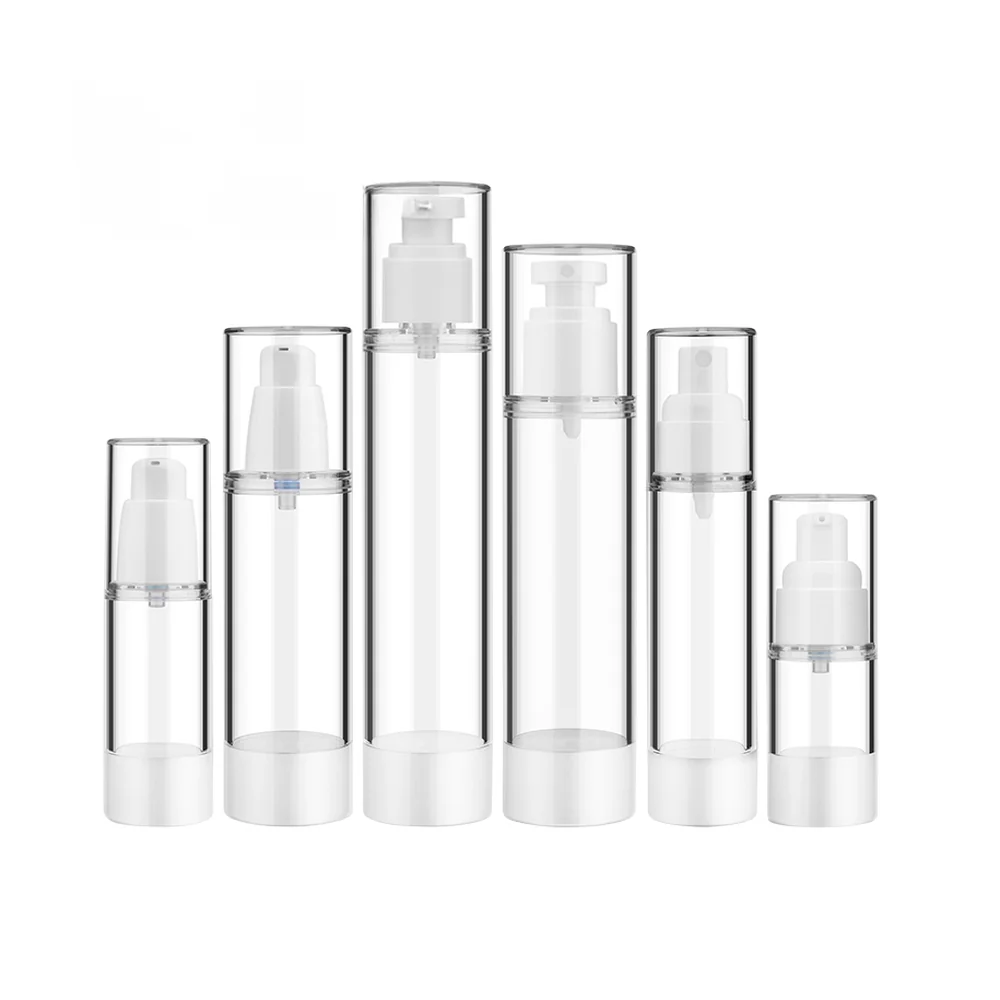
1. The photograph shows a family, not a SKU. Of the 289 formats, 108 list more than one capacity on one card — the airless family in the photograph above is one of them. That is the mould family: same shoulder, different body height. Your order is one of those sizes, and the number of sizes you need from one family changes the tooling line in the quotation.
2. The same neck takes different doses. Take the 28 mm closure group: 19 formats print a rate, and the rates run from 0.15 to 3.5 ml. The neck has to match the bottle; it says nothing about what the pump delivers. A buyer who shortlists by neck alone can end up with a pump that doses a quarter of the brief, or ten times more.
3. Where the source prints no rate, there is no rate. Only 102 of the 289 formats print a discharge rate. The other 187 — mostly bottles and jars, plus some pumps whose source lists a closure and nothing else — carry no rate line at all, and we do not fill one in with a typical value. On those cards the absence is the information: the dose has to come from a sample test, not from the page.
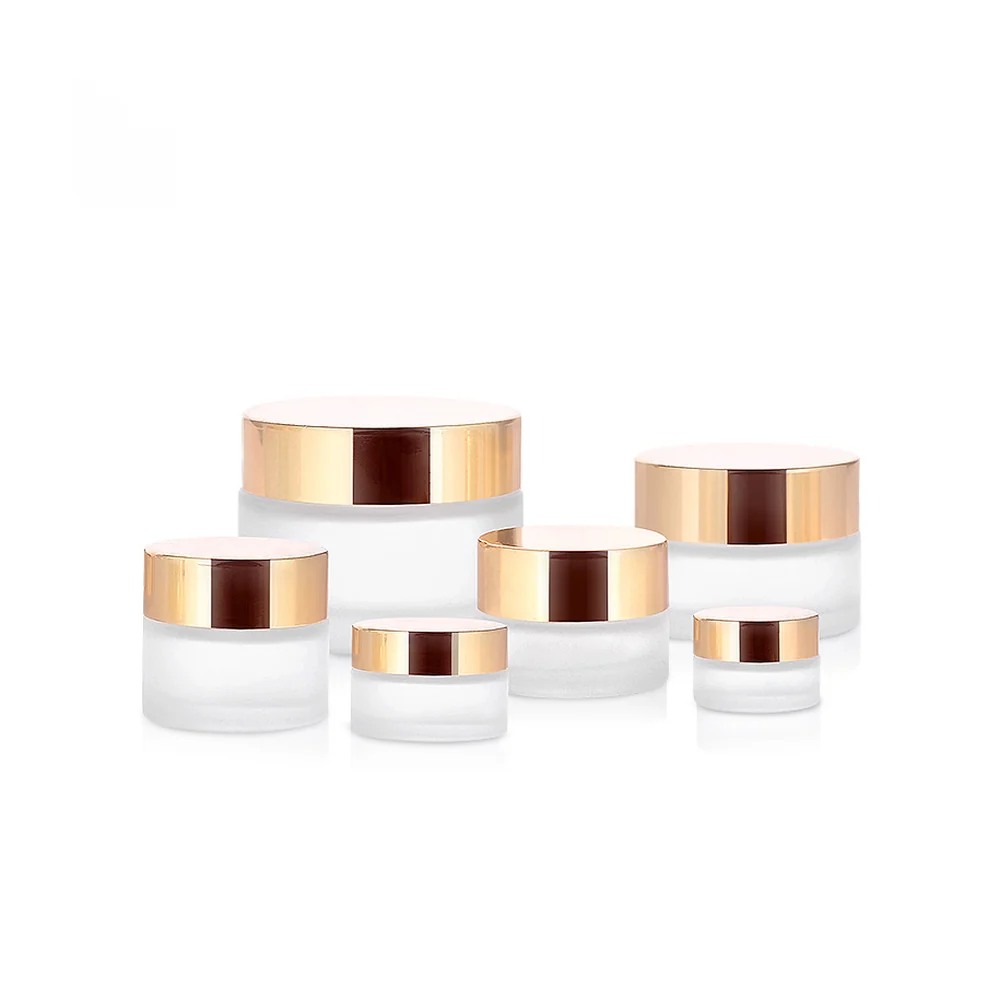
The closure line on each card is a cosmetic bottle closure spec, not a shape: a fine mist sprayer and a lotion pump can share a 24 mm neck and deliver very different amounts. The jar group raises the unit question that sets create. A jar is sold by fill weight in grams; a bottle by capacity in millilitres. A bottle-and-jar pair is therefore specified in two units, and a brief that gives both in ml will be re-quoted once the density is known. If the range is a set, state the grams for the jar and the millilitres for the bottle, and let the quotation carry both.
What goes in the brief
| Put in the brief | Why it decides the pack |
|---|---|
| Dose per use, in ml, with the tolerance you can accept | This picks the pump or sprayer before the bottle is chosen. A range is fine; a single number with no tolerance is not a specification. |
| The closure, as printed on the bottle drawing | The pump has to fit the bottle you already have, or the bottle has to be drawn to the closure you want. |
| Whether the formula needs airless or a dip tube | This is a formula decision with a cost attached; it changes both residue and unit price. |
| Fill volume per SKU, and how many SKUs share one family | It sets the size inside the family and the tooling line in the quotation. |
| Viscosity and whether the product is a lotion, cream, gel or spray | A pump sized for a lotion will not necessarily prime or clear a thick cream. |
| Whether the pack is filled by weight or by count | A fill line checks the fill; a count instruction checks the stroke. |
Dispensing packaging fails in the same place every time: the dose was assumed. If the dose is not in the quotation, the quotation is not complete. Ask for the printed rate and its tolerance, then ask which formats on that closure can meet it. Where the source prints both — 102 of the 289 formats here — the answer is checkable rather than a promise.
Where the figures come from
The formats are published as one source catalogue, spread across the bottles and jars, airless bottles and cream jars, pumps and sprayers pages. Each card shows the capacity, the closure and the discharge rate exactly as the source states them, and the size index lists the same formats in one searchable table. Every count in this article is taken from those published formats, so it can be checked against the page.
If a figure here and a figure on a page ever disagree, the page is right: it is generated from the same data this article was checked against.