
Lipstick Tube Dimensions: Aluminium, Plastic and the Inner Cup
A lipstick case is usually sold on its outside: 15 mm across, 88 mm tall, gold or black, round or square. Those are the numbers a catalogue leads with, because they are the numbers a buyer can see. They are not the numbers that decide whether the case works. The part that holds the stick is the inner cup, and its diameter is the one dimension that has to match the product going into it. The material — aluminium or plastic — is a separate question again, and it belongs beside the cup, not instead of it.
Of the 153 lipstick formats on our makeup collection page, 152 print a cup diameter. The lipstick tube inner cup is the small cylinder the bullet or refill sits in, and its values cluster into three groups — the largest of which prints two values side by side rather than one.
Lipstick tube dimensions are two measurements, not one
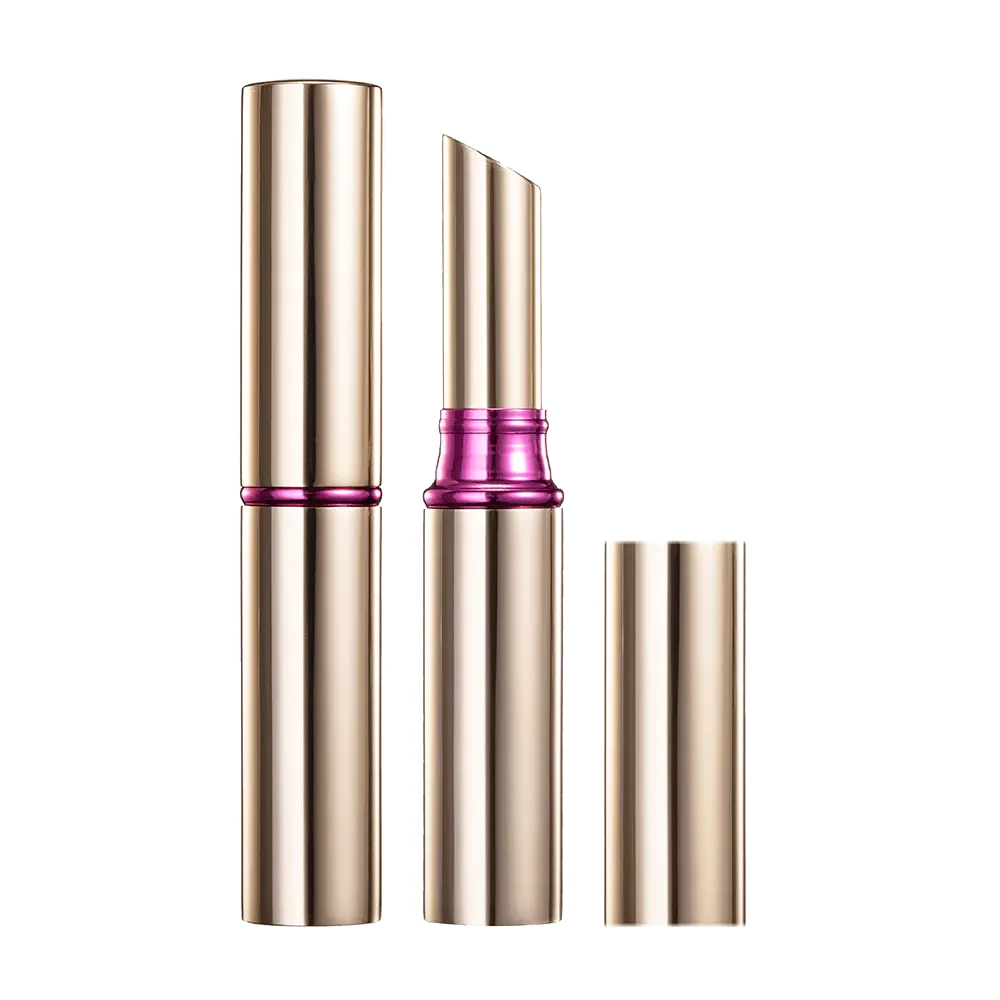
The outer diameter sets the look of the case and the space it takes on a display. The lipstick case diameter is therefore the first figure a catalogue shows. The height sets the stick length the mechanism can carry and the box it ships in. The inner cup sets what the case can hold: the diameter of the bullet, the refill or the mechanism that goes inside.
A buyer who specifies only the outside can receive a case that looks right and cannot take the refill. A buyer who specifies only the cup can receive a case that fits the product and is the wrong size for the line. Lipstick tube dimensions are therefore two measurements — the case and the cup — and both belong in the brief.
What the 153 formats print
| Inner cup, as printed | Formats | What it suggests |
|---|---|---|
| 12.1 and 12.7 mm printed together | 86 | The most common group. The source prints both values in the cup field; confirm which one a given case runs before ordering a refill. |
| 11.1 mm | 37 | A slimmer cup, common on narrow cases. |
| 8.5 mm | 24 | A small cup, typically a mini or sample format. |
| 9.0, 9.2 and 6.3 mm | 5 | A handful of specialist sizes. |
| Not printed | 1 | Unknown. Do not infer it from the case diameter. |
The 12.1/12.7 group is the one to read carefully. The source does not print a single cup size for those 86 formats; it prints both values in the same field, in several spellings. That is a signal that the case family is offered around two common cup standards, not that every case in the family takes both. The question to ask is specific: for this case, which cup diameter is fitted?
The 11.1 mm and 8.5 mm groups are single-value and easier to brief against. A buyer who starts from the case size can miss them, because the outer diameter does not tell you which cup is inside.
The outer diameter is printed less often than the cup
Forty-seven of the 153 lipstick formats print a height and a cup but no outer diameter. That is not an omission in the article; it is what the source sheet gives. Where the outer diameter is printed, it runs from 13.5 mm to 26 mm across the range, and the printed height runs from 41.4 mm to 120.3 mm.
This matters when you compare a case to a display or a carton. If the outer diameter is not printed, it has to be measured on a sample or confirmed in writing; it cannot be calculated from the cup and the height. The two are different measurements, and one does not determine the other.
Aluminium or plastic: the material is a choice, not a line
The 153 lipstick formats sit inside a 328-format aluminium and plastic makeup packaging collection. In that collection the source prints the case material as "Aluminium or plastic" on every lipstick format — a family-level option rather than a per-format assignment. That is why the material question in a lipstick brief is something to ask, not something to read off the card.
It also means aluminium and plastic are not two separate product lines here. They are two answers the range allows for the same formats. A buyer who needs an aluminium lipstick case should say so in the brief, and a buyer who has already chosen a plastic case should say that too; the format card alone may print either.
For the cup, the material does not change the question. An aluminium lipstick tube and a plastic one are briefed against the same 12.1/12.7, 11.1 and 8.5 mm groups, because the cup is a mechanism dimension and not a material one. What changes is how the case is finished and how it feels in the hand — design questions that sit beside the dimension brief rather than inside it.
What a buyer should not do is infer the material from the price or the finish. Ask per format, in writing, before the case is quoted. On this range the answer is a choice the source allows, not a specification the card commits to.
Refill formats put the cup standard first
Refill lipstick has moved the cup from a hidden part to the first specification. When the customer keeps the case and buys the stick again, the cup diameter has to match the refill, and it has to match it across every case in the line. That is why the 12.1/12.7 group matters: it is the group a refill brief is most likely to land in.
The catch is that the source prints both values in one field. A refill programme cannot assume that a case printed 12.1/12.7 takes either refill; it has to confirm which cup is fitted, case by case. The 11.1 mm and 8.5 mm groups are single-value and easier to brief, but they are also the groups a refill sourced elsewhere is least likely to match.
Refill also shifts where the brand sits. A refill programme keeps the outer case, so the case material and finish carry more of the identity than they do in a single-use pack — which is why the aluminium-or-plastic question above is worth settling early rather than at quotation. It does not change the cup measurement: the refill still has to fit the cup, whatever the case is made of.
What to put in a lipstick case brief
| Specify | Why it decides the case |
|---|---|
| Inner cup diameter, and the refill or bullet it must hold | This is the compatibility dimension. Without it, the case is a shell. |
| Outer diameter and height | Display, carton and the feel in the hand. |
| Mechanism type — twist, click or refillable | Two cases with the same cup can work in different ways. |
| Material, per format | The family covers aluminium and plastic; the brief should say which. |
| Decoration area and method | The printable band depends on the case shape, not only its size. |
| A sample with your refill fitted | Cup diameter is a number; the fit and the click are not. |
If the brief starts from a refill you already buy, send the cup diameter and the refill drawing first. If it starts from an empty lipstick tube you like, ask for the cup diameter before you ask for a price. The lipstick mechanism size belongs in the same question: two cases with the same cup can still differ in the twist or click that moves the stick, and that difference is felt every day by the customer.
Where the figures come from
The 153 lipstick formats are published on the makeup collection page and on the makeup page, each card printing the cup, the outer diameter and the height where the source gives them. The size index lists the same formats by dimension. The counts in this article are taken from those published cards, so every figure can be checked against the page.
Every case in the collection is made to order, and order quantity is confirmed per project. If lipstick tube dimensions are part of your brief, send the cup diameter, the outer size you need and the refill or bullet the case must hold. We will tell you which formats print a match, and where a sample is the only way to confirm the fit. Start an enquiry →