
Lotion Pump Output: 0.18 to 4.5 ml per Stroke Across 145 Formats
A lotion pump does one job: it moves a fixed volume of product out of the bottle each time the head is pressed. That volume is the pump's output, and it is the number a fill line, a dosage instruction and a cost-per-use calculation all depend on. It is also the number most pump briefs leave out, because the brief is written around the bottle neck and the bottle is what the buyer can see.
All 145 lotion pumps on our pumps page print a discharge rate. The range runs from 0.18 to 4.5 ml per stroke, and the figure is stated with a tolerance on every format rather than as a single clean value. This page is about how to read that figure and how it relates to the lotion pump neck size, which is the field buyers usually start from.
Lotion pump output is a printed range, not a guess
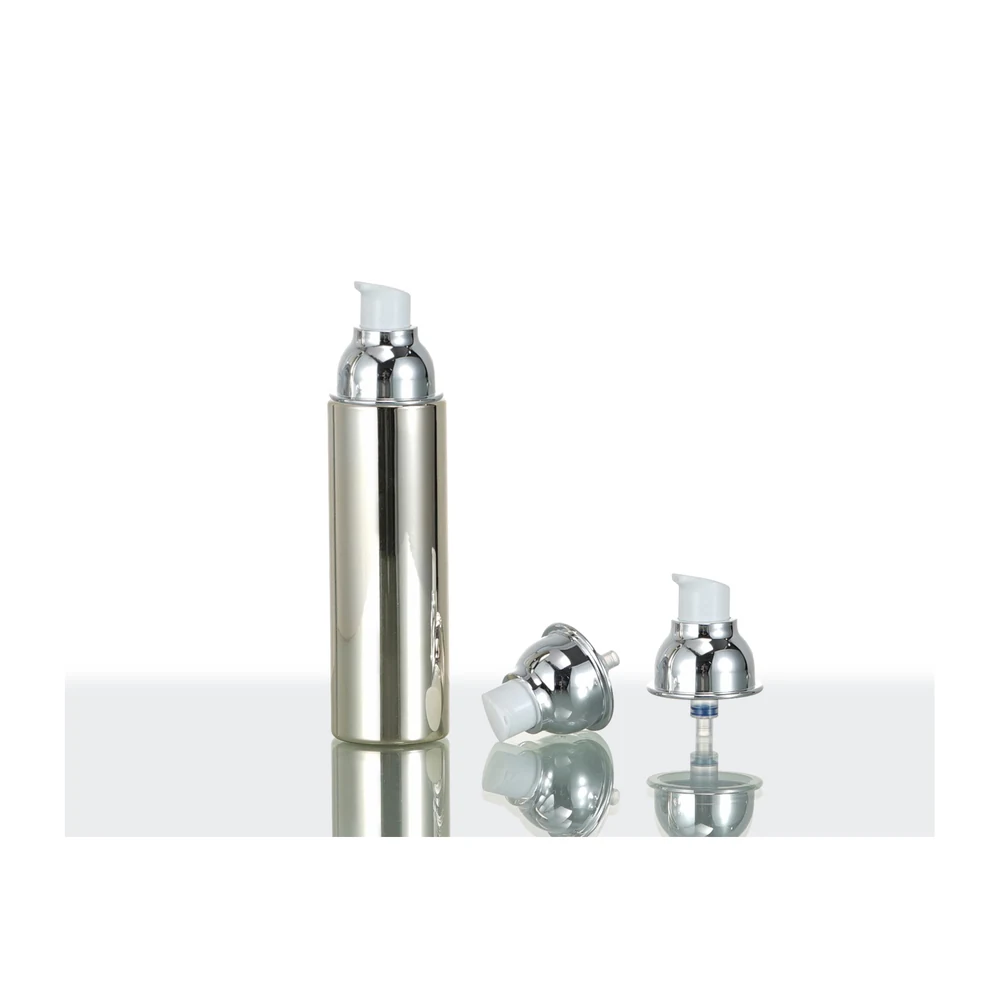
The source sheet prints output in cc, and one cc is one millilitre, so the two units can be read as the same number. What the sheet does not do is round. A format printed at 2.0 ml carries a tolerance of ±0.2 ml; a 4.0 ml format carries ±0.4 ml. A dispensing pump rate is set by the chamber bore and the length of the stroke, and across the 145 formats the tolerance scales with the output, which is what you would expect from a chamber machined to a tolerance.
That tolerance matters more at the small end. At 0.18 ml per stroke, a tolerance of ±0.03 ml is roughly 17% either way. At 4.0 ml, ±0.4 ml is 10%. If your product is dosed by count — two pumps for a face, three for a body — the small pump's tolerance is the one that changes the customer experience. If it is dosed by weight on a filling line, the line is checking the fill, not the pump's printed rate, and the tolerance is a starting point rather than a guarantee.
Lotion pump output, then, is not one number per pump family. It is a printed value with a printed spread. When a brief asks for lotion pump output, the answer should be two figures: the rate the pump is printed at, and the tolerance around it. Both belong in the brief.
Neck size groups the pumps; it does not set the output
The pumps page groups 145 formats by the neck the source prints, from 18 mm to 43 mm. That grouping is useful because the neck is the one dimension that has to match the bottle you already have. It is not a proxy for output. The table below shows why.
| Neck as printed | Formats | Output range |
|---|---|---|
| 18/410 | 4 | 0.18 – 0.25 ml |
| 20/410 | 8 | 0.18 – 0.25 ml |
| 24/410 | 15 | 0.18 – 2.5 ml |
| 28/410 | 35 | 2.0 – 4.5 ml |
| 33/410 | 53 | 4.0 – 4.5 ml |
At the ends of the range the pattern is clear. Every 33/410 pump in the collection delivers 4.0 or 4.5 ml; every 18/410 and 20/410 pump delivers 0.18 or 0.25 ml. Those are different pumps in use: a large-chamber body pump at one end and a small-dose pump at the other. Across the lotion pump sizes in this collection, the 4.0 ml pump is the single most common format at 67 of the 145. The neck and the output move together because the pump's chamber has to fit inside the closure.
The middle of the table is where the assumption breaks. The 24/410 group holds 15 pumps whose output runs from 0.18 to 2.5 ml — a factor of about fourteen on the same neck. The lotion pump ml per stroke figure, in other words, is not fixed by the neck that groups the pump. A buyer who shortlists by neck alone can end up with a pump that delivers a quarter of what the brief intended, or ten times more.
Why 24/410 is the crossover
The 24/410 neck is the most common bottle neck on the market, and the pump range reflects that: it is where small-dose and medium-dose pumps share a closure. In this collection the 15 formats on that neck include a 0.18 ml pump for a serum, a 2.0 ml pump for a lotion and a 2.5 ml pump for a thicker body product. They are not interchangeable in use even though they fit the same bottle.
At 28/410 the overlap is narrower but still real: 35 formats from 2.0 to 4.5 ml. A 28/410 bottle can take a 2.0 ml lotion pump or a 4.5 ml high-viscosity pump, and the two will feel and dose differently.
The practical rule is to choose the output first and the neck second, or to state both in the same brief. If the bottle is already fixed, the neck is a constraint, not a choice; the output is still open, and it is the field that decides whether the pack works.
Which output suits which product
The pump does not know what is in the bottle, but the product does. A serum, a lotion and a body wash need different volumes per stroke even when they share a neck, and the output bands on this page map to those jobs more cleanly than the neck table does.
| Output band | Typical product | What to confirm |
|---|---|---|
| 0.18 – 0.25 ml | Serum, eye product, facial oil, travel-size treatment | Whether the small dose still primes reliably with your fill, and how much the tolerance moves a two-pump dose. |
| 2.0 – 2.5 ml | Lotion, face cream, sunscreen | Whether the stroke suits the fill weight and the number of uses the pack should deliver. |
| 4.0 – 4.5 ml | Body lotion, body wash, shampoo, large-format packs | Whether the bottle and dip tube support the larger draw without suck-back. |
Two cautions. First, the band is a starting point, not a specification: viscosity changes what a pump delivers, and the sheet prints a rate for a test medium rather than for your formula. Second, the tolerance matters more at the small end — at 0.18 ml a ±0.03 ml tolerance is about one-sixth of the stroke, so a two-pump dose can vary by up to a third between pumps.
As travel, trial and refill formats grow, the 0.18–0.25 ml end carries more weight than it did a few years ago. That is a reason to treat the small-dose formats as a first-class choice rather than a fallback, and to test them on the actual fill before a launch.
What a pump brief should contain
| Put in the brief | Why it decides the pump |
|---|---|
| Output per stroke, in ml, with the tolerance you can accept | This is the dose. A range is fine; a single number with no tolerance is not a specification. |
| The bottle neck, as printed on the bottle drawing | The closure has to match. If the neck is not printed, measure it before shortlisting. |
| Product viscosity and whether it is a lotion, cream or gel | A pump sized for a lotion will not necessarily prime or clear a thick cream. |
| Whether the pack is filled by weight or by count | A fill line checks the fill; a count instruction checks the stroke. They need different confirmation. |
| The closure finish you need — lotion pump, sprayer or disc top | The same neck can take different closures, and the choice changes the output range available. |
| A sample of the shortlisted pump on your own bottle | Priming, suck-back and the feel of the stroke are not visible on a spec sheet. |
If the output is not in the quotation, the quotation is not complete. Ask for the printed rate and its tolerance, then ask which of the formats on that neck can meet it. On this range every format prints both, so the answer is checkable rather than a promise.
Where the figures come from
The 145 formats are published on the lotion pumps page, grouped by the neck the source prints. Each card shows the neck, the discharge rate and the tolerance exactly as the source states them, and the size index lists the same formats alongside the bottles they fit. The counts in this article are taken from those published formats, so every figure can be checked against the page.
Every pump in the collection is made to order. Order quantity is 5,000 pieces per format per colour, and sampling is free of charge with the international courier at the customer's cost. If lotion pump output is part of your brief, send the output you need, the neck on your bottle and the product it has to move. We will tell you which formats meet all three, and where a sample is the only way to confirm the stroke. Start an enquiry →