
How to Compare Cosmetic Packaging Quotations: 9 Lines That Matter
Two quotations for the same lipstick case can differ by 40% and both be honest — the difference is what each one includes. Unit price is the least reliable number on a quotation, because it is the only line everyone looks at. These are the nine lines that decide what you actually pay, roughly in the order they get missed.
1. The Incoterm, and what sits outside it
A price quoted EXW stops at the factory gate. FOB includes getting the goods loaded at the port. CIF adds the main freight and insurance. The same product can appear 25% cheaper on an EXW quote and cost you more by the time it lands.
Ask the supplier to state the term in writing, and ask separately what it does not cover. If a quote is presented as a delivered price, ask precisely which charges are inside it — clearance and destination charges are where the ambiguity usually hides.
2. What the unit price actually includes
“Unit price” is a phrase, not a definition. Get these separated on paper:
- Decoration — silk-screen, hot stamping, spray and UV finishes are usually per colour, per pass. A three-colour print is not a rounding error.
- Assembly — a case with an inner cup, a sleeve and a mirror is assembled work, not a single moulded part.
- Inner packing — polybag, insert, shaker, divider.
- Outer carton — and whether the carton spec matches your retailer’s requirements.
An item quoted as “the case” and an item quoted as “the case, decorated and packed” are different products.
3. Tooling: cost, ownership, and how it is charged
There are two routes and they must not be mixed in one quote without labelling:
| Route | What you pay | Effect on timeline |
|---|---|---|
| Existing tooling (a mould the factory already runs) | No tooling charge | No tooling stage at all |
| New tooling (built for your design) | A one-off tooling charge, plus trial shots | Adds a full tooling stage before production |
If tooling appears on the quote, three questions belong next to it: who owns the mould, who maintains it, and can it be transferred if you move production later. Get the answers in writing, not in a call. (This is a commercial question with contract consequences — take proper advice for your jurisdiction.)
4. The quantity the price is based on
A unit price means nothing without the quantity it assumes. Ask for the tier breaks: the price at your target quantity, and the quantity at which the next price step starts. This is where you find out whether ordering 20% more buys a materially better unit price.
On minimum order quantity, be suspicious of any supplier who answers with a number before understanding your product. What is achievable depends on the material, the mould and the decoration, so the honest answer is that it is confirmed per project — ours included.
5. Lead time, split into stages
“30–45 days” on its own is not a schedule. Ask for the stages separately, because that is where you find the bottleneck:
| Stage | Existing tooling | New tooling |
|---|---|---|
| Sample | 1–3 days | Prototype ~14 days |
| Tooling | — | 25–45 days |
| Pre-production sample | 3–5 days | 5–10 days after tooling |
| Mass production | 7–15 days | 20–40 days after approval |
| Inspection and packing | 3–7 days | 3–7 days |
Note that on our own quotations, custom mass production runs 30–45 days and custom sampling ~14 days after design confirmation. The useful comparison between two suppliers is not the total — it is which stage each one is slower at.
6. Sampling terms
- How many sample rounds are included before you are charged for changes?
- Who pays sample freight, and who pays customs on a sample shipment?
- Is a golden sample signed off and retained by both sides before mass production? This single document resolves most later disputes about “that is not what we approved”.
7. Payment terms and what triggers each milestone
A common structure is 30% deposit, 70% before shipment. What matters is the trigger wording: paid against what document? A balance released on a booking confirmation is a different risk from a balance released on an inspection report.
8. The quality line — the one most quotes omit entirely
A quotation should state the inspection standard, and many do not. Ask for:
- The sampling standard — we work to ANSI/ASQ Z1.4 (MIL-STD-105E), Level II, single normal sampling.
- The defect limits — critical 0, major 1.0–2.5, minor 4.0.
- The inspection stage — during production, final inspection, or pre-shipment.
- Who pays for rework, and who holds the final reject-or-approve decision if a batch fails.
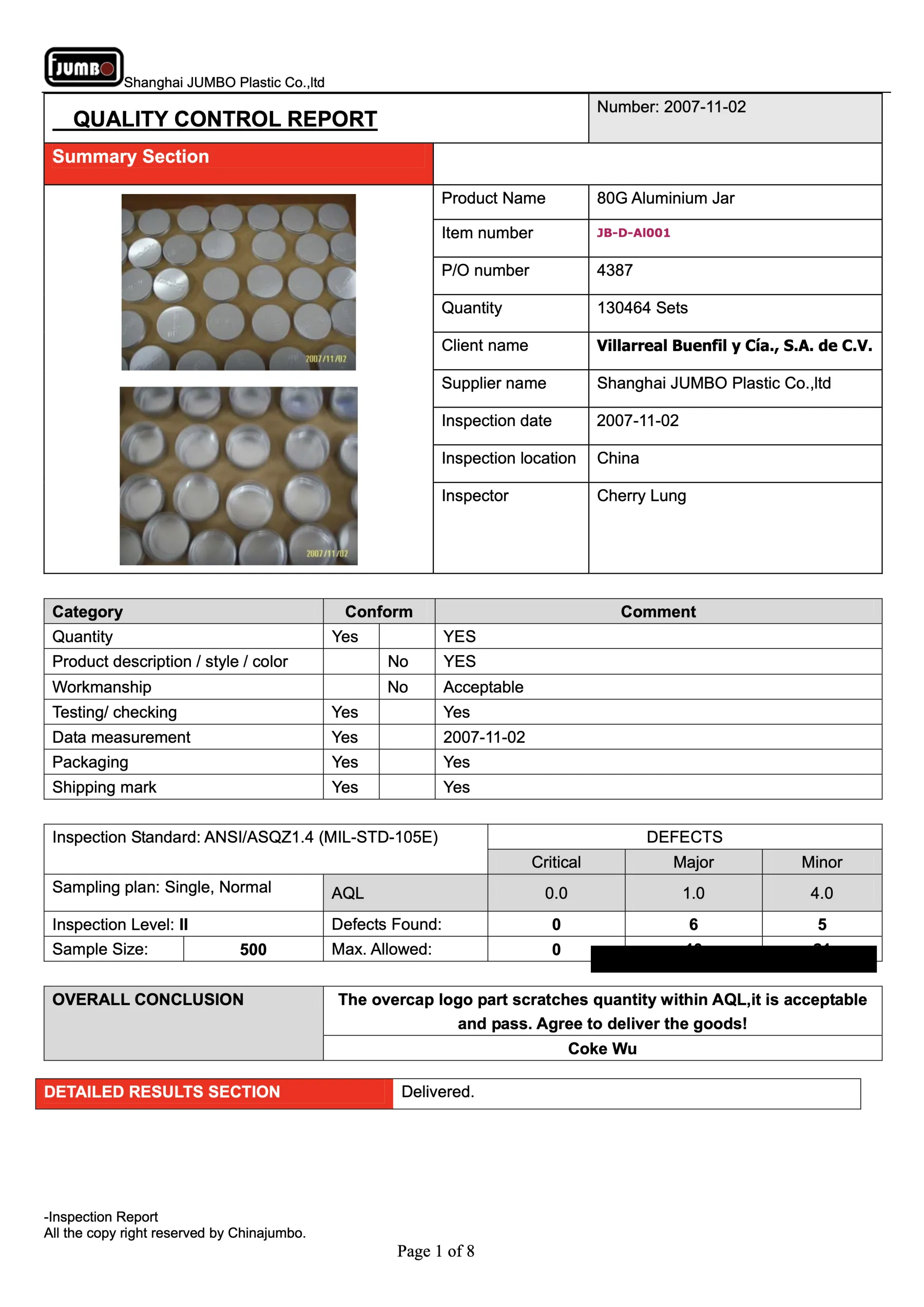
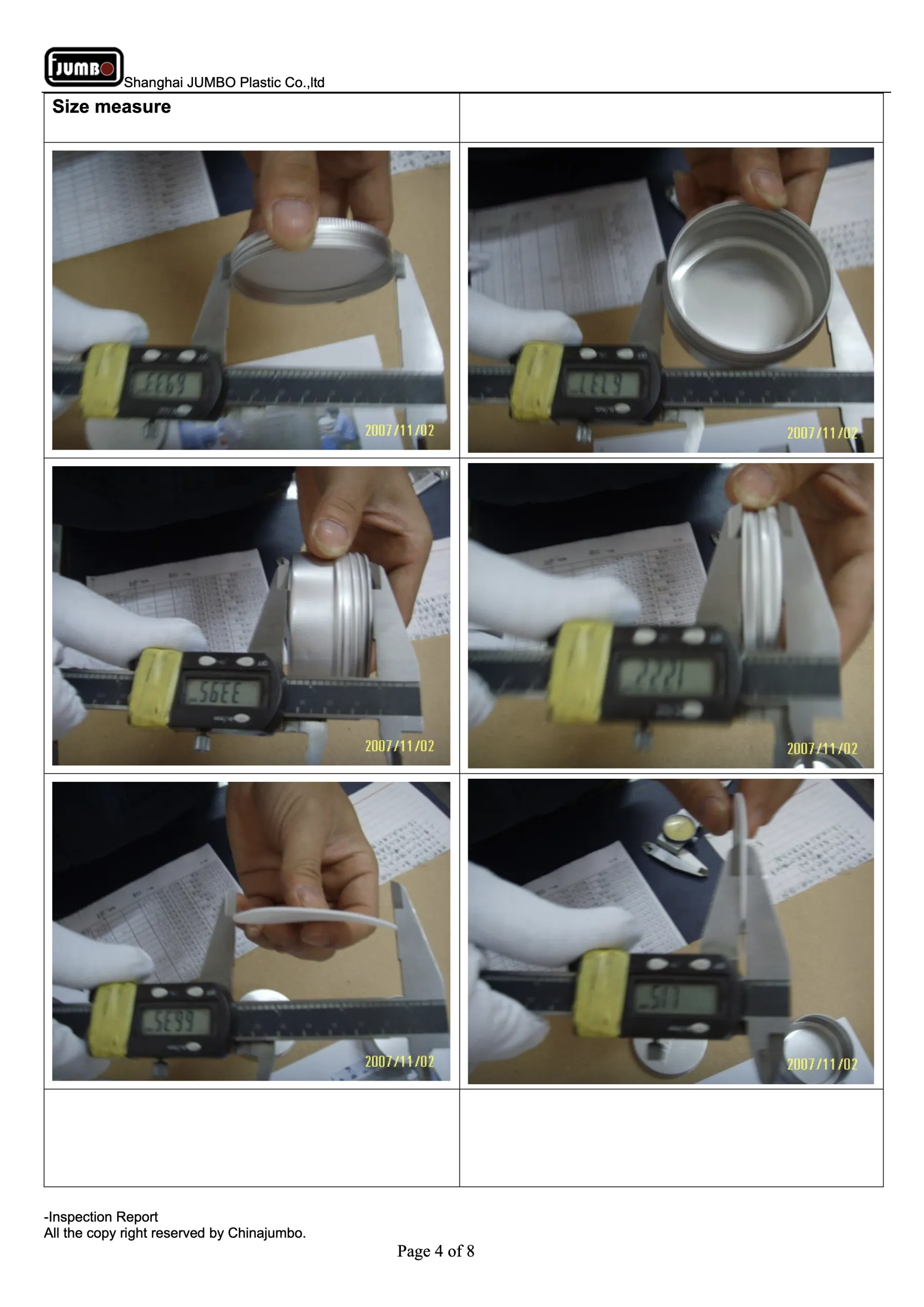
This is the line where a real report beats a promise. In a 2007 final inspection, an 80g aluminium jar order of 130,464 sets recorded 6 major and 5 minor defects against limits of 10 and 21. The batch passed — not because it was perfect, but because the agreed limits were explicit and the defects fell inside them. That is what an AQL figure is for.
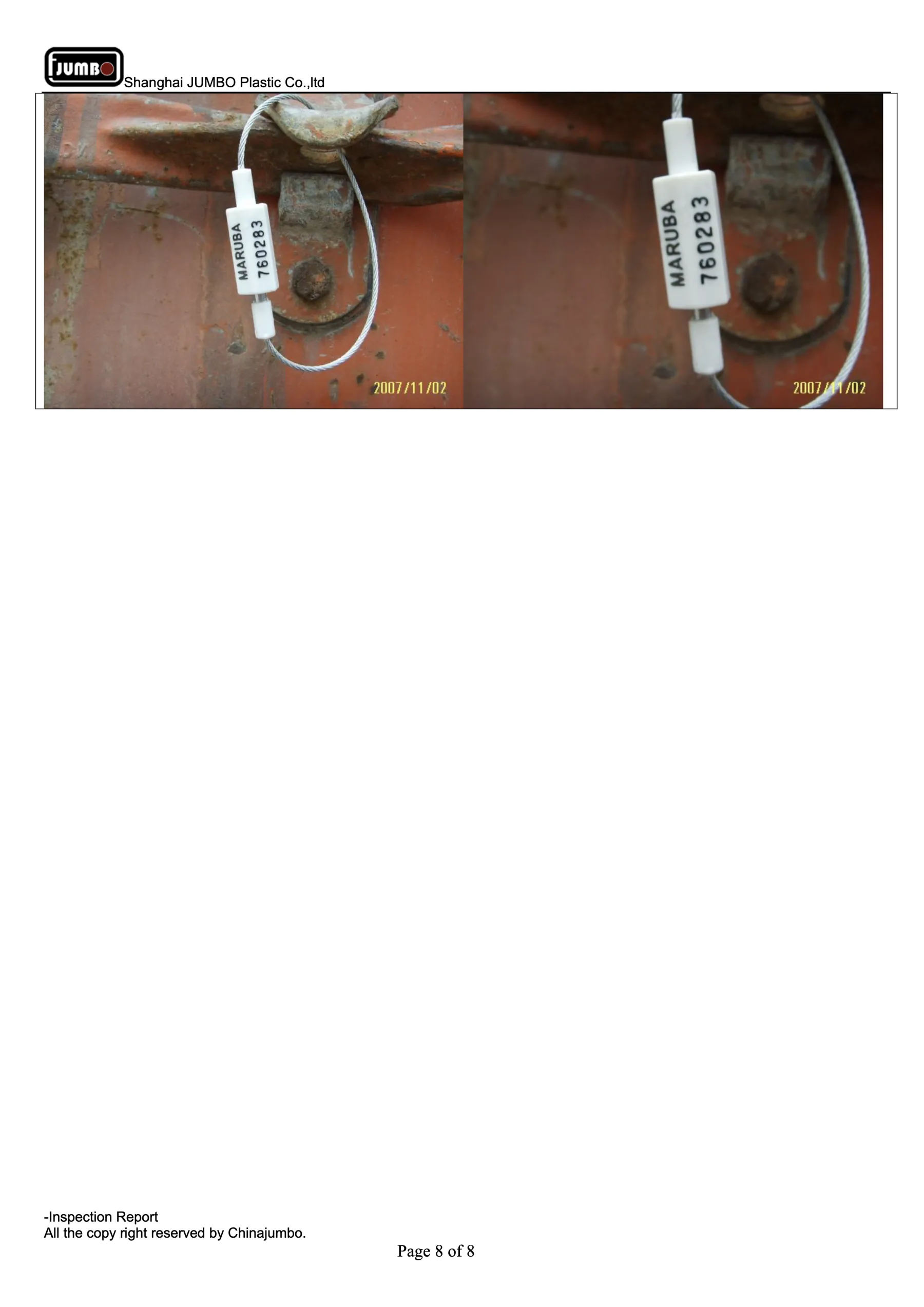
Sample pages from our inspection archive (2007–2020):
The report a supplier will not show you
Almost every supplier can show a passing inspection report. The more useful question is what happens when a batch does not pass — and whether they will show you one.
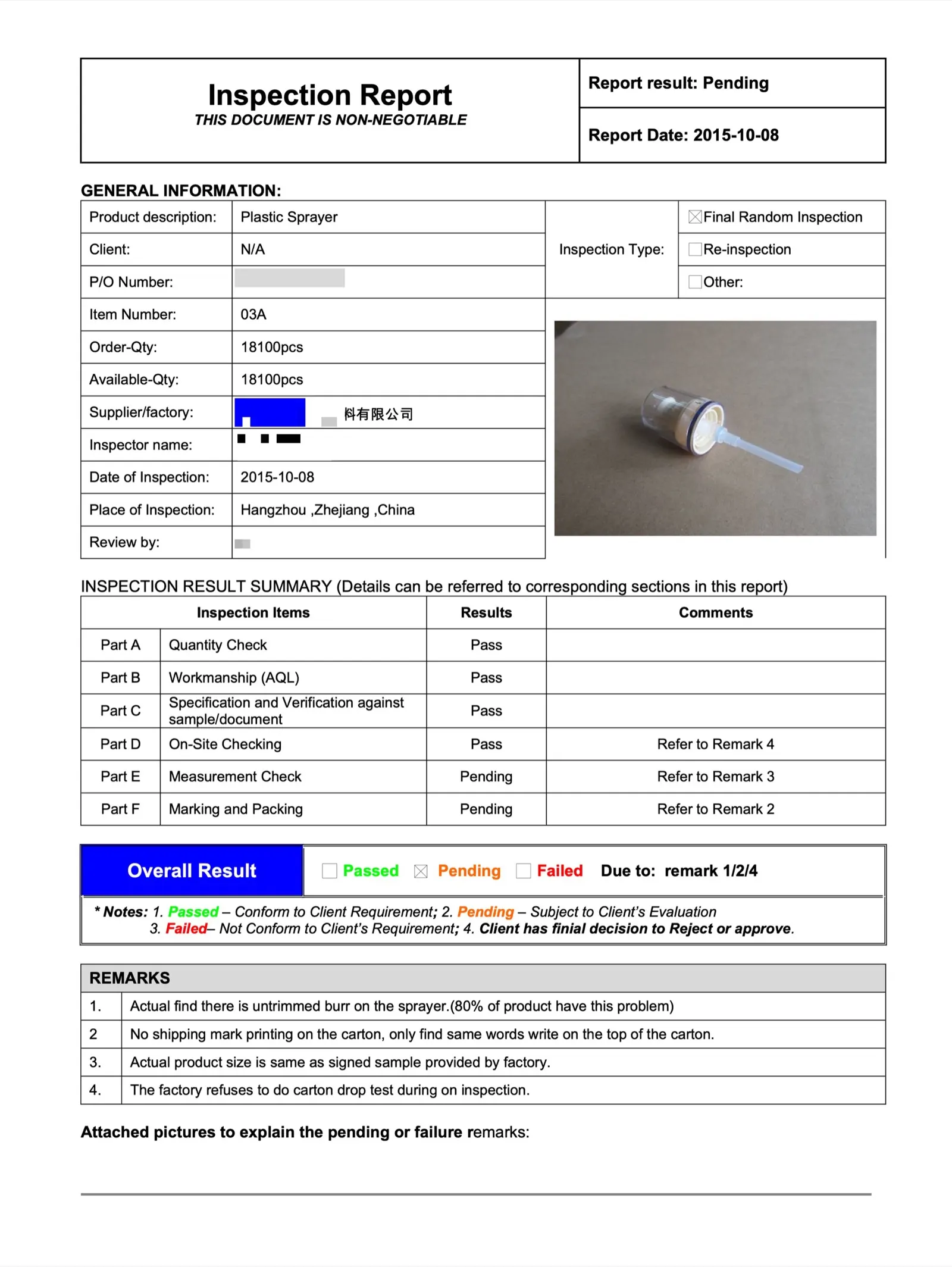
In a 2015 final inspection, 80% of sampled sprayers had untrimmed burrs. The report was marked Pending, the factory was required to rework before release, and the factory’s refusal of a drop test was written into the report rather than left out of it. The final reject-or-approve decision stayed with the client.
That document is in our archive alongside the passes. A supplier who only shows you clean reports is showing you marketing, not quality control — and a quotation that never mentions defect limits is not a quality commitment at all.
9. What is excluded
Finally, list what the quote leaves out, so it cannot surprise you later: freight and insurance if not on the chosen term, destination duties and clearance, artwork and screen or plate setup, storage or demurrage at the port, and mould maintenance.
Putting it together
Compare two quotes line by line against these nine, and the cheapest unit price frequently stops being the cheapest option. If you want to see the structure in practice, our own response to a brief is on the procurement page.
Send your spec and compare
Tell us the product, the market and the finish you have in mind. You will get a reply within 24 hours stating what the price includes, the tooling position and a stage-by-stage schedule.