
Eco-Friendly Cosmetic Packaging: A Buyer's Guide to Sustainable Options
Eco-friendly cosmetic packaging is not a single product — it is a set of material and design choices, and the choice that is "green" for one brand is often wrong for another. In this guide we separate the real options — PCR recycled content, mono-material design, glass, and refillable systems — from the marketing claims. You will learn what each option actually delivers, what it costs, and the questions to ask a supplier so you can make a sustainability claim you can defend.
What "Eco-Friendly" Actually Means for Cosmetic Packaging
Three different things are usually sold under the same label, and they are not interchangeable:
- Recycled content (PCR): the packaging contains recycled material — for example rPET (recycled PET). This reduces demand for virgin plastic.
- Recyclability: the packaging can be collected and processed by existing recycling streams after use. A mono-material PET bottle is far easier to recycle than a bottle with a metal spring and an ABS ring.
- Refillable / reusable: the packaging is designed to be used more than once — a durable outer case with replaceable refills, cutting the material used across many uses.
Each is a legitimate route, and the best answer for your brand depends on your product, your market, and what you can honestly document. See how these options fit your needs on our sustainable packaging page.
The Main Sustainable Options, Compared
The table below is the honest version of the comparison most brands are shown. Notice the trade-offs — the point is fit, not perfection.
| Option | What it is | Main benefit | The trade-off to know | Good fit for |
|---|---|---|---|---|
| PCR plastic (rPET, rPP) | Recycled-content resin | Less virgin plastic; aligns with EU PPWR PCR targets | Can vary in clarity and color; supply of food-grade PCR is constrained | Bottles, jars, tubes where a tint is acceptable |
| Mono-material design | ≥95% single polymer, same-polymer labels | Designed for recycling; future-proof under EU rules | Requires redesigning pumps, collars and springs | Any plastic packaging heading to EU |
| Glass | Infinitely recyclable container | Premium feel; fully recyclable; inert for formulations | Heavier, more fragile, higher shipping cost | Serums, foundations, premium creams |
| Refillable systems | Durable case + replaceable refill | Large material reduction per use; strong brand story | Higher upfront tooling; needs consumer habit change | Lipstick, foundations, airless systems |
| Biodegradable / bio-based plastics | Plant-based or compostable materials | Renewable feedstock story | Often NOT recyclable in existing streams — disposal can be unclear | Only where disposal is genuinely controlled |
Compare material properties in detail in our packaging materials guide.
How to Avoid Greenwashing (So Your Claim Survives Scrutiny)
Sustainability claims are increasingly challenged — by regulators, retailers, and consumers. Three rules keep a claim defensible:
- Claim the specific thing you did. "Contains recycled content" is verifiable; "eco-friendly" or "green" is vague and risky. If you use PCR, state the percentage and keep the supply documentation.
- Don't call biodegradable packaging recyclable. The two disposal paths are different, and mixing them up can attract scrutiny under consumer-protection rules in the EU and US.
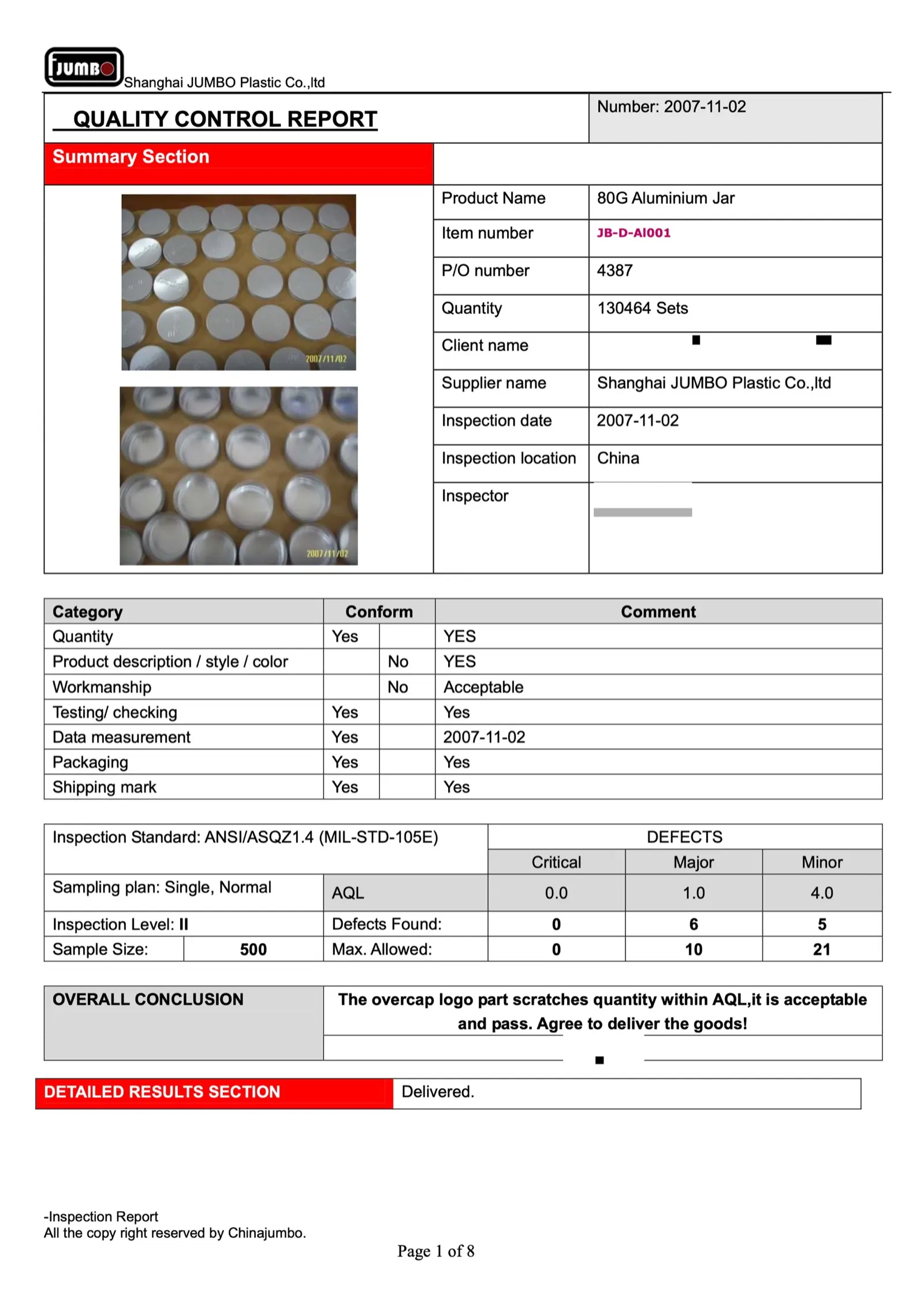
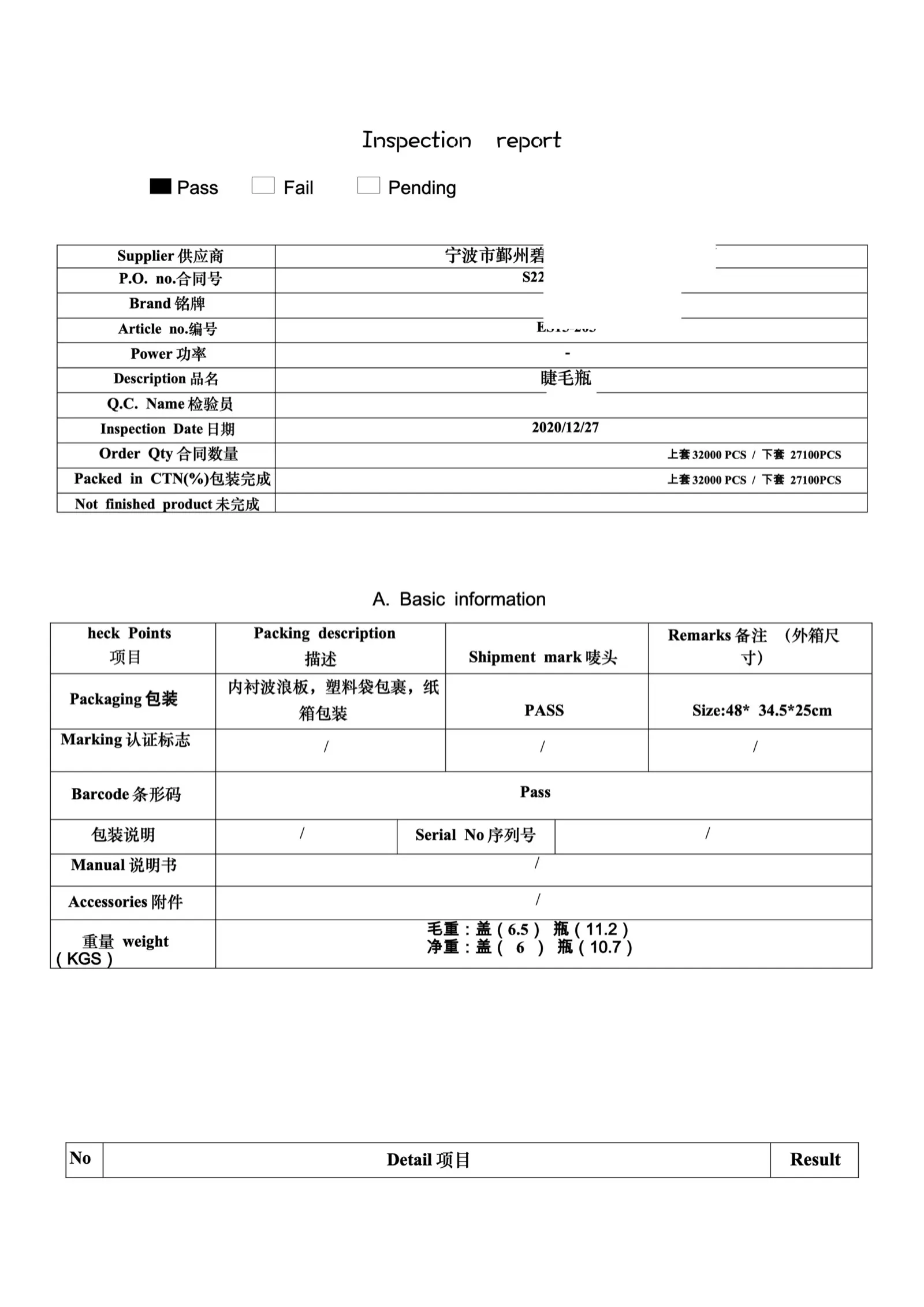
- Document it. Recycled-content certificates, material data sheets, and inspection records are what make a claim credible. Ask your supplier what documentation they can actually provide — see the real inspection standard we keep on every order below.
Cost vs. Commitment: What to Expect
The honest economics of sustainable packaging:
- PCR plastic typically costs a little more than virgin and can require color adjustment — but the EU's 2030 recycled-content targets make it a planning necessity for EU-bound products.
- Mono-material redesign has an upfront tooling cost but keeps you compliant and avoids an expensive redesign closer to the 2030 deadline.
- Glass adds weight and freight cost but is the easiest recyclability story for premium lines.
- Refillables need more tooling upfront, but the per-use material saving is large — and the refill habit is increasingly expected by buyers.
The common thread: sustainable choices are confirmed against your project's design, quantity, and target market. MOQ, tooling, and lead times are all confirmed per project — ask us for a quote on your specific product.
The Quality Side of the Story: Real Inspection Records
Whatever material you choose, the packaging has to survive manufacturing, filling, and transit. Our inspection history shows the standard we hold every order to — AQL sampling to ANSI/ASQ Z1.4, checked at multiple stages. The real record below is from a 2007 batch of 130,464 aluminium jars where minor logo scratches fell within AQL limits and the batch was authorized for shipment.
| Year | Product | Quantity | Standard | Result |
|---|---|---|---|---|
| 2007 | 80g Aluminium Jar | 130,464 sets | ANSI/ASQ Z1.4 · Level II | PASSED — minor logo scratches within AQL limits |
| 2020 | Mascara Bottle | Full order | Bilingual EN/CN report, 0.02 mm caliper measurement | PASSED |
Real report pages from our inspection archive:
What JUMBO Provides
- Materials: PCR (rPET, rPP) options, mono-material design, glass, and metal containers
- Quality: ISO 9001:2008 quality management, AQL inspection to ANSI/ASQ Z1.4
- Documentation: material data sheets and inspection records on every order
- Since: 2005, serving 50+ countries
Browse design inspiration for sustainable looks, then tell us what caught your eye — we custom-engineer it for your brand.
Building eco-friendly packaging that you can defend?
Tell us your product, target market, and sustainability goals — we'll recommend the right material and documentation.